Engaging Students in Challenge
Engaging Students in Challenge
Challenges lead to growth when they stretch students’ capabilities in a way that isengaging and accessible. Unfortunately though, many people associate challengewith difficulty and therefore shy away from something that appears too hard. Overtime, however, we can adjust that perspective by emphasising that "easy is boring”and challenge is “interesting". This is only a first step in motivating students but animportant one, nonetheless.
Other approaches include:
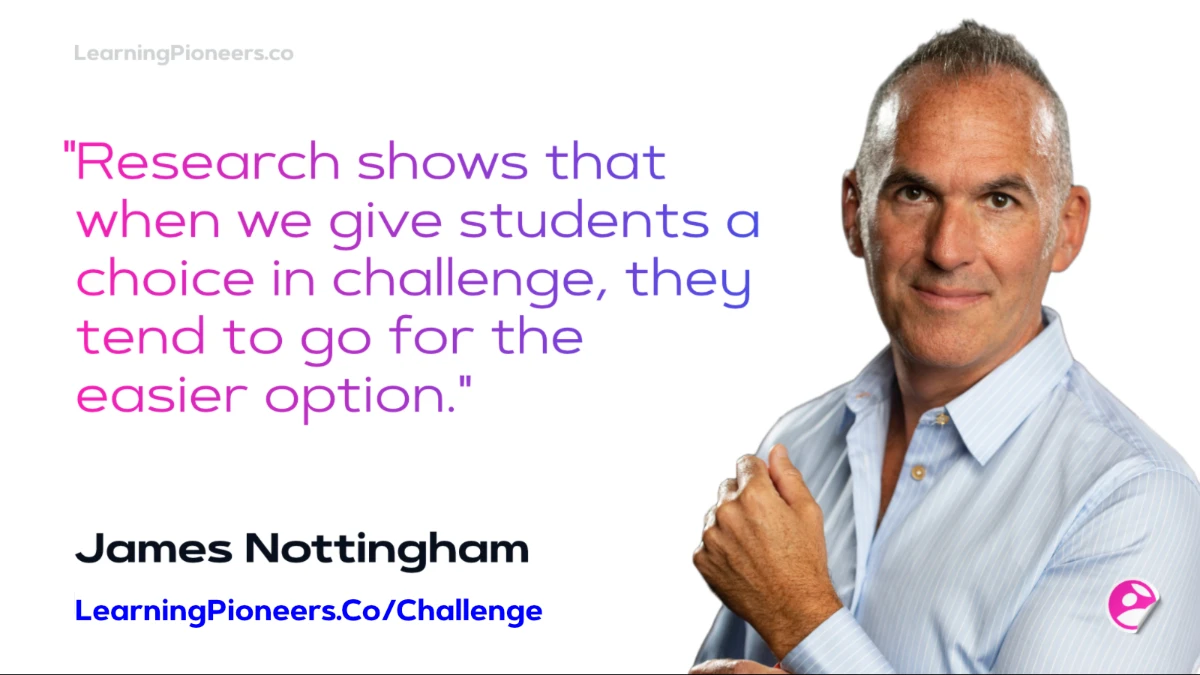
Empowering students is a key element in making challenge accessible. Whenstudents feel they have some control over their learning, they are more likely toengage with challenging tasks. Providing choices in how they approachassignments, what level of difficulty they wish to tackle, and which learning strategiesthey want to try fosters a sense of ownership. This autonomy can transform thelearning experience, encouraging students to dive into challenges with enthusiasm.
Creating a culture of risk-taking is equally important. It is essential for students tounderstand that making mistakes is not only permissible but also a vital part of thelearning journey. When teachers normalise failure and view mistakes as learningopportunities, students are more willing to take risks and experiment with new ideas.By embedding this mindset into the classroom culture, we create an environmentwhere challenges are seen as stepping stones rather than barriers.
Integrating challenge into the classroom routine helps students becomeaccustomed to stepping out of their comfort zones. Gradually increasing thecomplexity of tasks allows learners to build resilience and adaptability over time.Moreover, celebrating their efforts and progress reinforces the belief that acceptingchallenges is worthwhile. Recognition of their achievements fosters a sense of prideand motivation to continue pushing their limits.
Explaining the rationale behind the challenges we present is vital for student buy-in. When students understand the importance of challenge for their personal growth,they are more likely to embrace it. Sharing research findings that illustrate thebenefits of challenging oneself—and connecting these findings to their goals—caninspire students and deepen their appreciation for the learning process.
A supportive learning environment is the backbone of any effective educationalexperience. When students feel safe, respected, and encouraged, they are far morelikely to take on challenges. Building positive relationships with students, establishingclear expectations, and creating spaces for open dialogue are essential elements infostering a nurturing classroom atmosphere.
Teachers can also utilise the Learning Pit model, which visually represents thejourney from comfort to confusion, and ultimately, to understanding. Byacknowledging that feeling lost at times is a natural part of learning, we help students
appreciate that struggle is an indicator of growth. Encouraging them to articulatetheir thought processes and providing targeted support as they navigate thesechallenges allows them to make steady progress—demonstrating that each step, nomatter how small, is worthy of celebration
.Recognising the individual needs of students is crucial to making challengeaccessible. Each learner has a unique zone of proximal development, andunderstanding this is key to differentiating challenge. This may involve providingvarying starting points for tasks, presenting a range of options with differing levels ofdifficulty, or adjusting the level of scaffolding to suit individual needs. Suchaccommodations ensure that every student finds a challenge suited to them.
Effective feedback is another powerful tool in this process. Focusing on the task,the learning process, and students' progress towards their objectives, rather thansolely on ability, nurtures a growth mindset. Specific, actionable, and encouragingfeedback helps students recognise their strengths and identify areas forimprovement. This practice reinforces the idea that learning is a journey of ongoingdevelopment.
Ultimately, fostering a growth mindset within the classroom is key to cultivatingresilient learners. By praising effort and the process of learning—not just finalresults—we help students see mistakes as opportunities for development.Encouraging them to embrace challenges as chances for growth and celebratingtheir achievements, no matter how small, fosters perseverance and resilience.By weaving these principles into our teaching practices, we can create a learningenvironment where challenge is accessible and beneficial for all students. Thissupportive atmosphere not only nurtures academic growth but also promotespersonal development, preparing our students to face the complexities of the worldbeyond the classroom. Together, let us strive to make challenges a rewardingexperience for every learner, transforming obstacles into opportunities for success.
P.S If you’re curious about strategies about how to go about embedding challenge into the heart of your classroom so that students:
- Genuinely relish challenge
- Understand how to get unstuck
- Transfer challenge to home learning
- Are articulate when reflecting on and talking about challenge
- Develop a broad, deep, strong experience of perseverence
- Are confident learners in and out of school
And you:
- Feel aligned with your values and practice
- Are bursting with ideas about how to embed challenge
- Have a deep understanding of your pedagogy - know what you are doing and why
- Know you can rely on your students to drive their own challenges
- Love teaching and learning
Consider joining myself and James Nottingham in this 5-part Masterclass series with 3 *BONUS* webinars from me on how to embed challenge into your classrooms:
Author

James Nottingham
James Nottingham is a British educator, founder of Challenging Learning, and creator of The Learning Pit® model, which encourages students to embrace challenges and develop a growth mindset. With extensive experience in teaching and educational leadership, Nottingham has authored influential books like Challenging Learning and Encouraging Learning. He is recognised as a Fellow of the Royal Society of Arts and has been named to the UK's Future 500 for his contributions to education. His work continues to inspire educators worldwide, aiming to transform teaching practices and student learning.
Recent Blog Posts
Can exhibition amplify Learning Power?
Discover how exhibitions can significantly boost learning power for students and professionals alike. Explore the benefits and impact.

Continue Reading...
Learning that goes beyond
Explore how Liger Leadership Academy in Cambodia uses Project-Based Learning to foster meaningful, purposeful, and joyful learning, developing ambitious students who make a difference.

Continue Reading...
What’s in your Palette of Learning?
Explore how intentional pedagogical approaches, inspired by James Nottingham and innovative educators, can create richer, more relevant learning for students. Discover practical examples and provoke your own teaching strategies.

Continue Reading...

Learning Pionners
Links Menu
Join the educational pioneering newsletter
Receive regular updates on cutting-edge pedagogy, professional development, and classroom practice.
© 2026 Learning Pioneers LTD. All rights reserved.