Do No Harm! Schools that heal
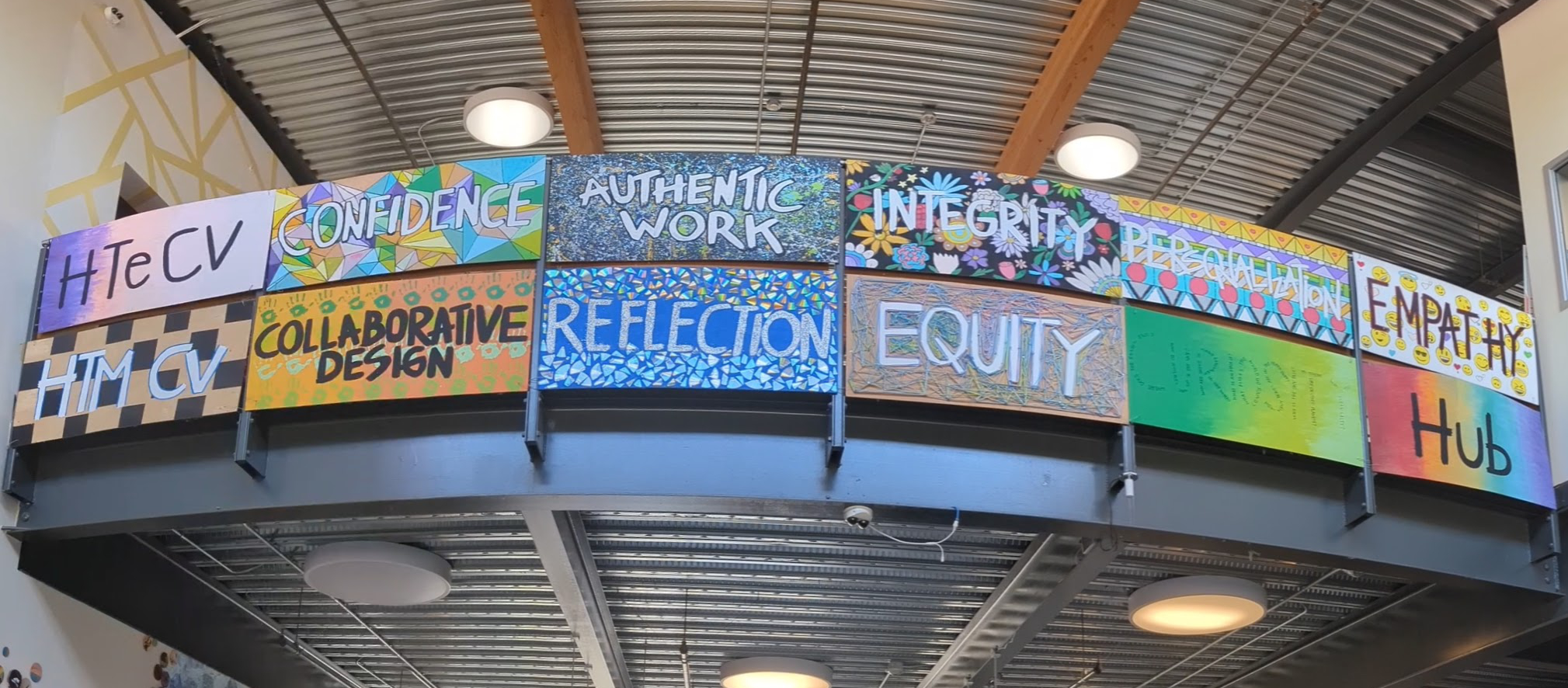
My heart is full after a 5-week trip across North America, meeting with incredible people doing incredible work, educators, schools and strangers. It turns out, no matter what the media is telling us, there are brilliant, bright people in places we are told are full of darkness.
As with any of my international trips, I am left reflecting on the connections between all the places I’ve visited - This time, visiting High Tech High, the HeartMath Institute, attending the NOIIE Symposium in Vancouver. Now, as I return home, I’m wondering:
- What do all of these places have in common?
- What shared values do these educators, schools and institutions have?
- What can I learn moving forwards?
The conclusion I came to on this visit was that every place we connected with, every school we visited, every human interaction we had, was that these were interactions that were healing.
Could schools cause harm?
It feels a little insane to explore the idea that we’re on a planet where schools might cause harm, where schools might damage children, where schools might gloss over important issues, where schools might ignore children’s needs, where schools might add to children’s, adult’s and family’s trauma.
As an educator who cares and who also values radical honesty, it does feel important to examine my own practice and behaviour, unconscious biases and habits that might have (and might still) result in damage in education, schools and beyond. This is an incredibly confronting thing to do - To consider that I might have played into systems and practices that, rather than empowering children, rather than celebrating and valuing them, I might have acted in ways that achieved the opposite. Yet, it’s absolutely necessary to do this and do this deeply and repeatedly to ensure I am fulfilling my responsibility as an educator and as a human.
Curious about whether or not other educators felt schools could be places of harm, I put out a LinkedIn survey which you can check out here. A whopping 90% of people answered “yes”! The comments, as always, are interesting to read. I wonder what you think? Can schools be places of harm? What makes you say that?
To frame this exploration with you all a little, I thought a framework might be useful. Some of you may be aware of the late Marshall Rosenberg’s work in “Non-violent communication”. Rosenberg spent his career working in some of the most conflicted human environments imaginable: war zones, deeply divided communities, prisons and areas of profound civil unrest across the United States, the Middle East and Africa. His life's work was dedicated to one question: how do human beings in opposition to one another find their way back to genuine understanding?
In his research and work, Marshall identified 9 human needs, which are outlined below:
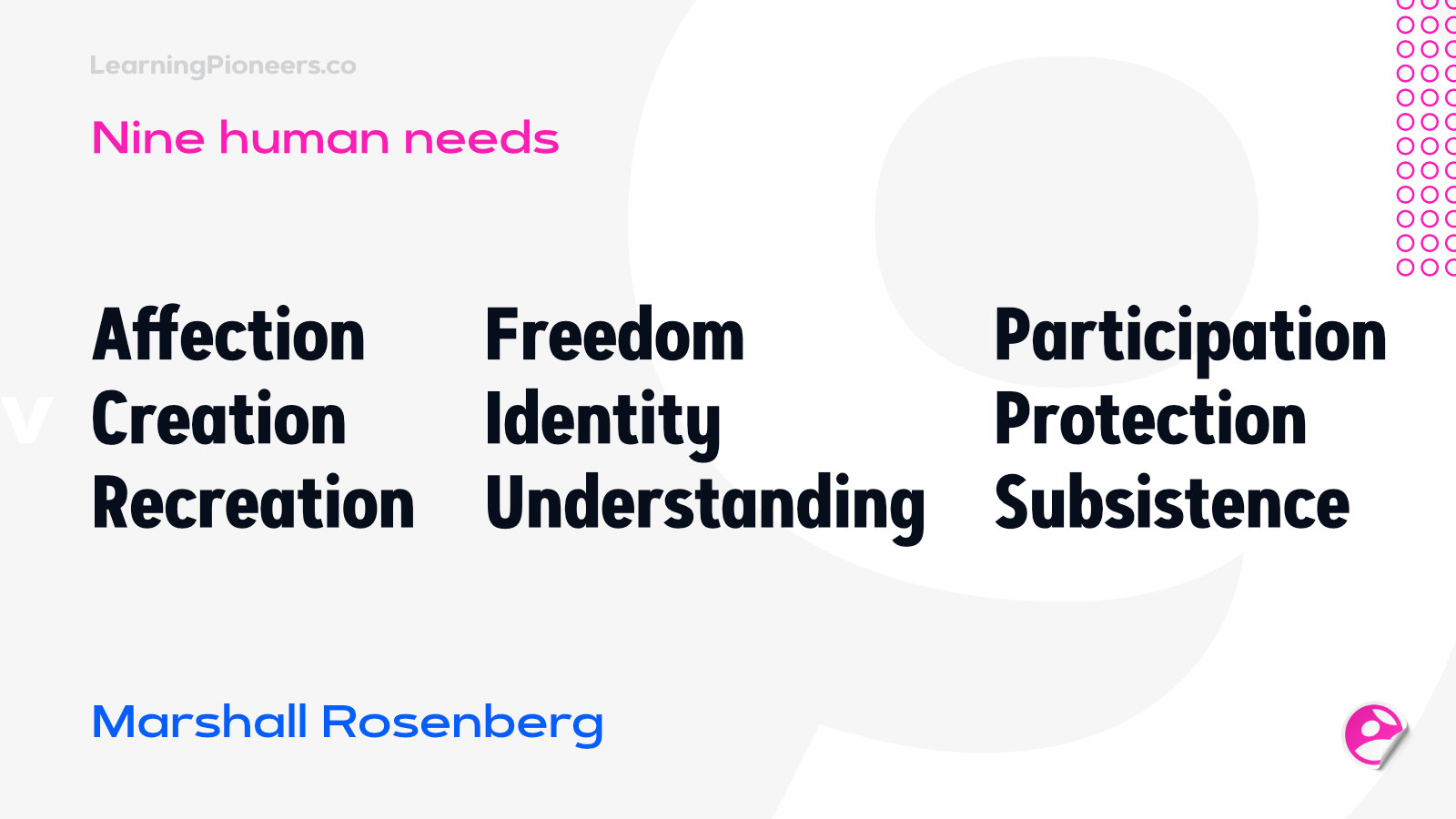
We could spend quite some time expanding out what we mean by each of these needs in an educational context and that would be a really useful exercise with your teams! Here are some questions you might like to explore with a colleague or whole school team.
- Is affection important for all children? What might that look like in a professional setting? How might that manifest differently when interacting with 5-year-olds, 10-year-olds, 16-year-olds?
- What might freedom look like in learning? Can we claim that our curriculum and how we deliver it is truly freeing?
- Is creation present in children’s opportunities in school? How? Where? When? What do the children have to say about this?
- Which of these needs do we feel are most attended to in our school? Which could we lean into and build more? What makes us say that?
Dr Linda Kaser and Dr Judy Halbert’s Spiral of Inquiry would be a brilliant framework to dig into these questions and explore more deeply - Their spiral framework ensures we gather data to truly understand what our students need, we listen to students and we also don’t make assumptions based on the data we have gathered.
You could argue that the more deeply and attentively we ensure each of these human needs are met in schools (and life!), the more enriched our students’ experiences in school will be. Rosenberg's work backs up this “hunch” - His central insight was that beneath every conflict, however entrenched, lie unmet human needs. When those needs are named, heard and genuinely attended to, connection becomes possible where there was previously only opposition.
Emotions in life and learning
We know that children learn best when they are engaged, in flow and when learning means something to them. High state emotions like joy, curiosity, wonder, excitement, pride, awe and a sense of belonging all create the conditions in which learning deepens and endures. Neuroscience shows us that positive emotional states activate the brain's reward circuitry, releasing dopamine and supporting memory consolidation, attention and motivation. When children feel safe, valued and genuinely interested, their brains are quite literally more receptive to learning.
How often do you think children experience those emotions in school? Do you think these feelings vary from class-to-class, school-to-school? And what might the opposite to regularly feeling these emotions look like? How often, in fact, do we witness children feeling disconnected, bored or frustrated?
I’m also curious as to how often children feel shame in school - Students have shared with us in interviews in Learning Pioneers that they have experienced teachers directly shaming them - that’s one extreme - but, if we’re not careful, children can also inadvertently feel shame - for example, if their classroom is high stakes (in “performance mode” as Guy Claxton calls it) or not psychologically safe, students may be laughed at for their mistakes or ostracised for being different. Schools that don’t prioritise building strong relationships might end up with a culture of bullying where students feel too ashamed to tell anyone what is happening to them.
Shame is a really debilitating emotion. It also gets pushed down, and, ironically, given the examples I’m about to share, covered up with masking. As adults, we learn to do this unconsciously - we have practised it so well in childhood and in school, we inadvertently push down shame. This leads us to behave in a way that will do anything - anything - to prevent us from feeling and tapping into that deep-seeded shame - whether that’s being coercive, “performing” to be liked, being a perfectionist or projecting onto and blaming others. Dr Brene Brown says, “When perfectionism is driving us, shame is riding shotgun and fear is that annoying backseat driver!”
What would it look like if we, as much as possible, took shame out of school? If learning were shame-less? And, if there were shame, we spoke about it. Well, the opposite might be feeling a sense of connection and belonging because adults have intentionally built relationships, creating community and built a psychologically and emotionally safe space. The opposite might also be having a sense of pride - Pride in the meaningful learning we are doing, pride in our school, pride in the high quality work we are producing (more on this soon!!). We might also create learning experiences that involve empathy and compassion, as Brene Brown says that empathy is the antidote to shame.
I nearly titled this blogpost “shameless learning” - schools that heal would intentionally create learning situations that induced feelings of pride, connection and empathy, rather than shame. I wanted to share a photo from Ron Berger’s presentation at the NOIIE conference:
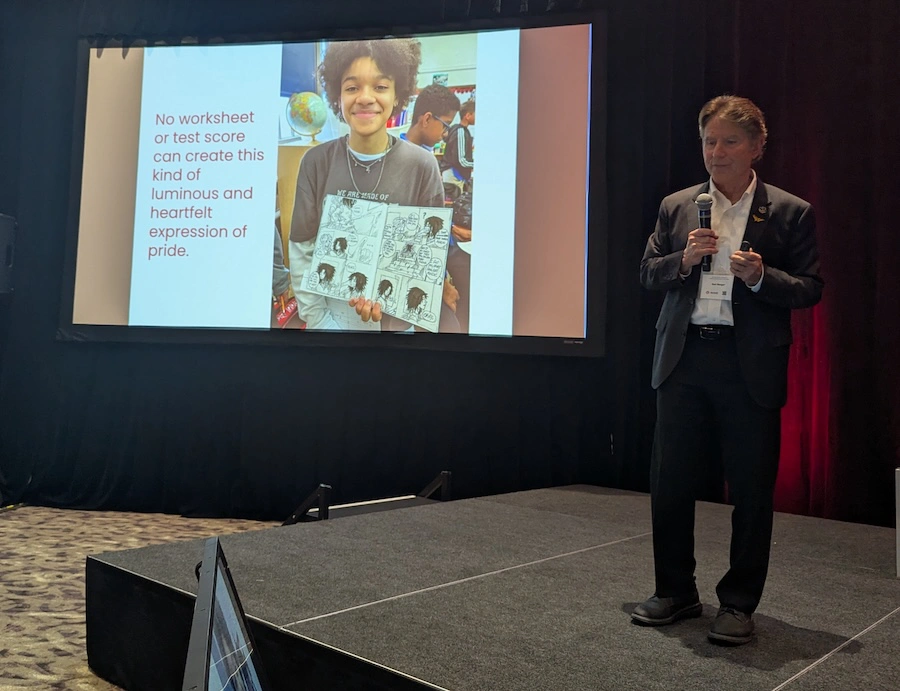
I love the wording on this slide. I love the student’s face even more - For me, you can see the pride, heart and soul shining through this student’s eyes. It was something every single student’s face had in common in Ron’s sharing - their eyes and faces were lit up - I would suggest that, in school at least, their needs were being met - A result of the methods and protocols of all EL Schools, including Crew Time, craftsmanship and feedback and “work that matters”.
Using the framework of human needs and this whistlestop exploration of emotions in learning, I’d now like to segway into some examples of learning from my trip to the States and Canada - Examples of learning where these needs were met (and then some!), where connection and student dignity and purpose were prioritised and where the result, unsurprising, was incredibly articulate, caring and connected students.
Example 1: High Tech High, San Diego
Many of you will know of High Tech High (HTH) - It’s one of the world’s beacon Project-Based Learning (PBL) Schools - those of you who have been reading my blogs or have been connected with me for a while will know that I’m a massive PBL fan. In fact, I would go as far as to say that every time I’ve visited a PBL school (such as Liger Leadership Academy in Cambodia - blog post on that visit here - or XP School in Doncaster, UK), I leave wondering why we’re doing anything else. What makes me say that? Because the work is so meaningful, students learn that they can make a difference and they also “stretch all of their learning muscles” in the process. I’ve covered some of my “why’s” behind PBL in this blogpost - And I’m now going to add one more: Great PBL schools impact massively on their community. In fact, when I visited HTH everyone we spoke to knew them - Uber drivers, waiting staff, our hosts, random people on the street - why? Because it seemed like everyone had either been involved with or been positively impacted by projects from the school. How cool is that?! The school is absolutely embedded into and appreciated by the local community. This speaks to the flip the late David Price used to share of schools flipping from the idea of community serving the curriculum to “curriculum that serves community”. Here’s a short video (43 seconds!) of David talking about that:
It’s a subtle yet profound shift to many more traditional systems. Schools that impact positively on their local community are not only healing for the students, who feel purpose and pride in their learning, they are also healing for their local communities who benefit from the projects designed and carried out by the students.
The students of HTH gave me a tour of all three schools at their Chula Vista Campus - So I gained perspective from primary, middle and high school students. Those of you who have visited HTH will know the corridors of the school are filled with projects the students have completed, as well as the process of learning to complete those products. Here are a few photos of those projects:
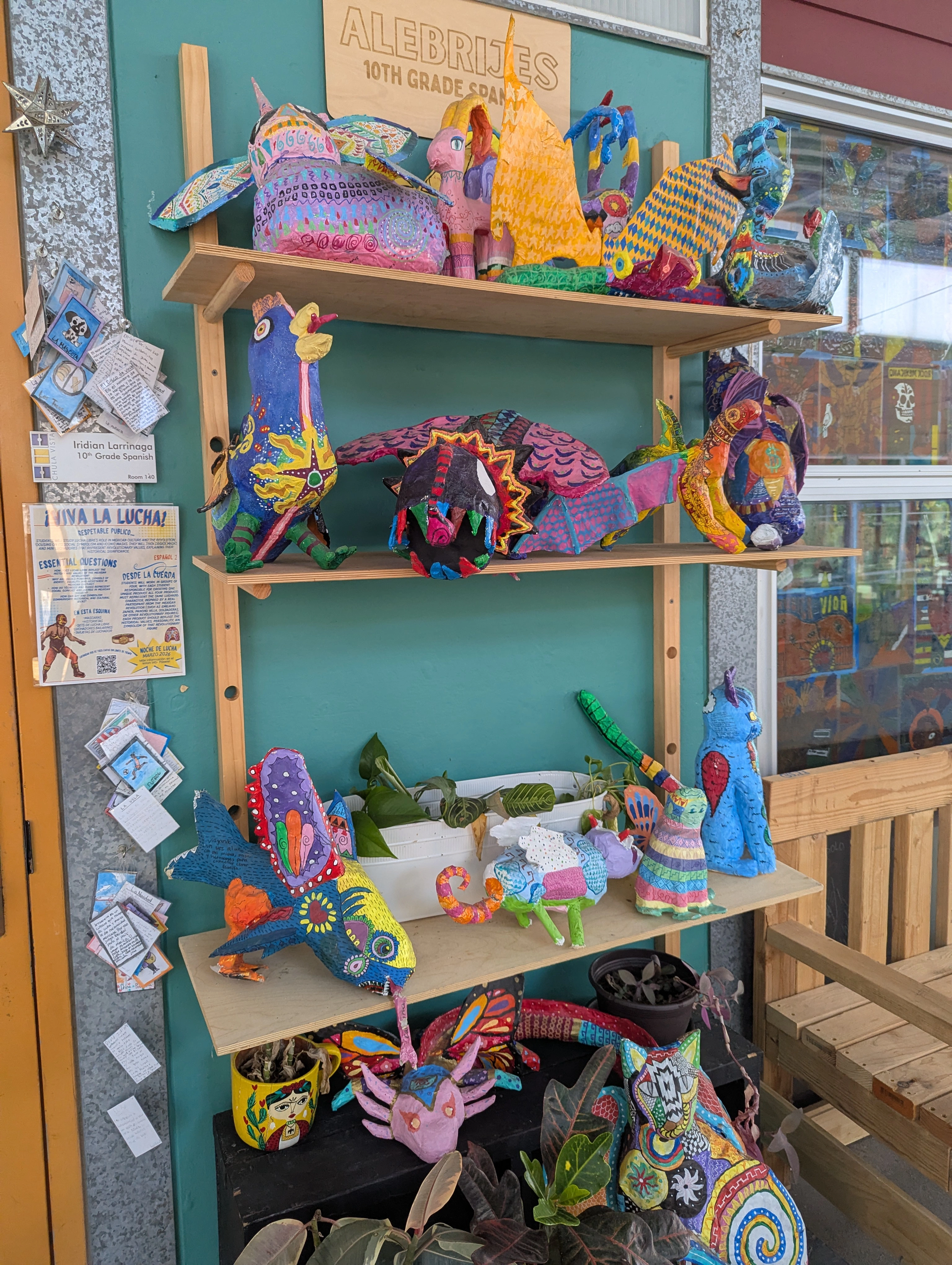
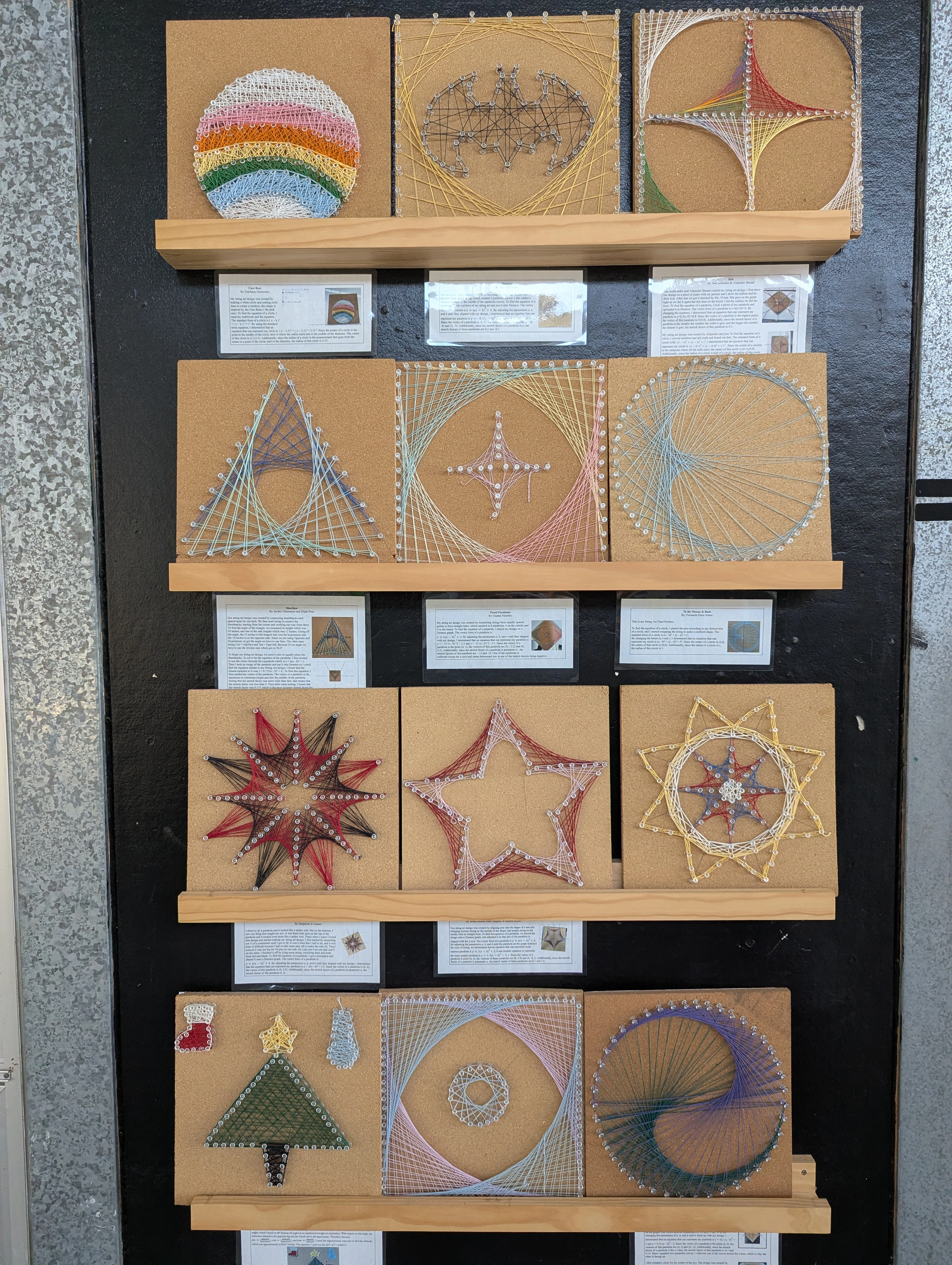
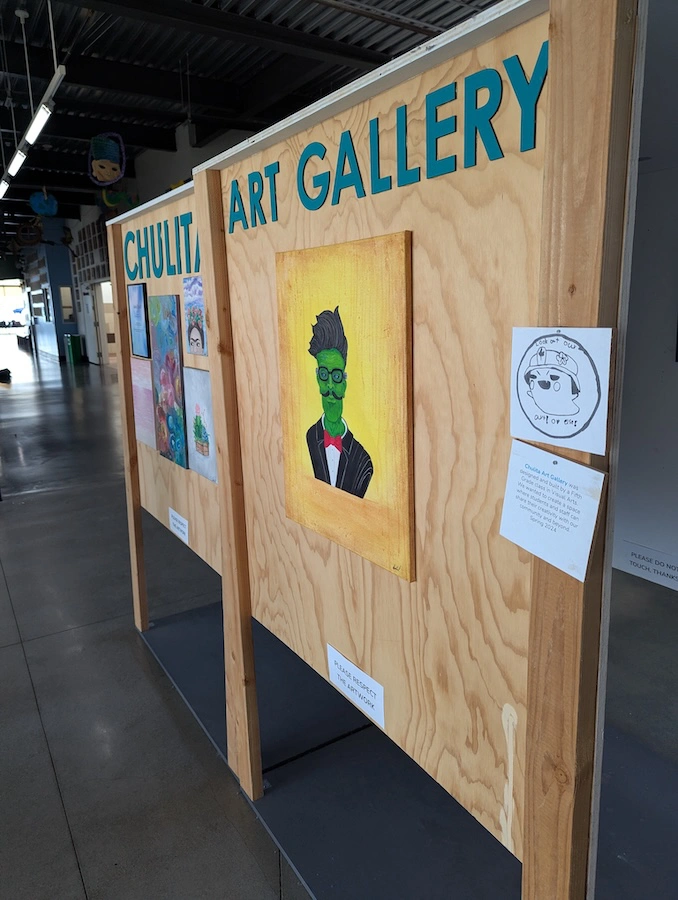
When hearing from Ron Berger, a few weeks later at the NOIIE conference, he explained the thinking behind displaying projects like this:
“Students then see themselves on the walls. They will see ‘this is our heritage, this is the work we do, this is what I do at this school.”
Students then build a sense of pride in the impact they have on the world around them as well as feeling like they really belong to something and somewhere that matters.
When speaking with the students and being shown around the school, it called my attention that many of the projects focused on identity, specifically cultural identity. Teachers told me that at least one project per year would do this. Here’s an example of a project on “masking”.
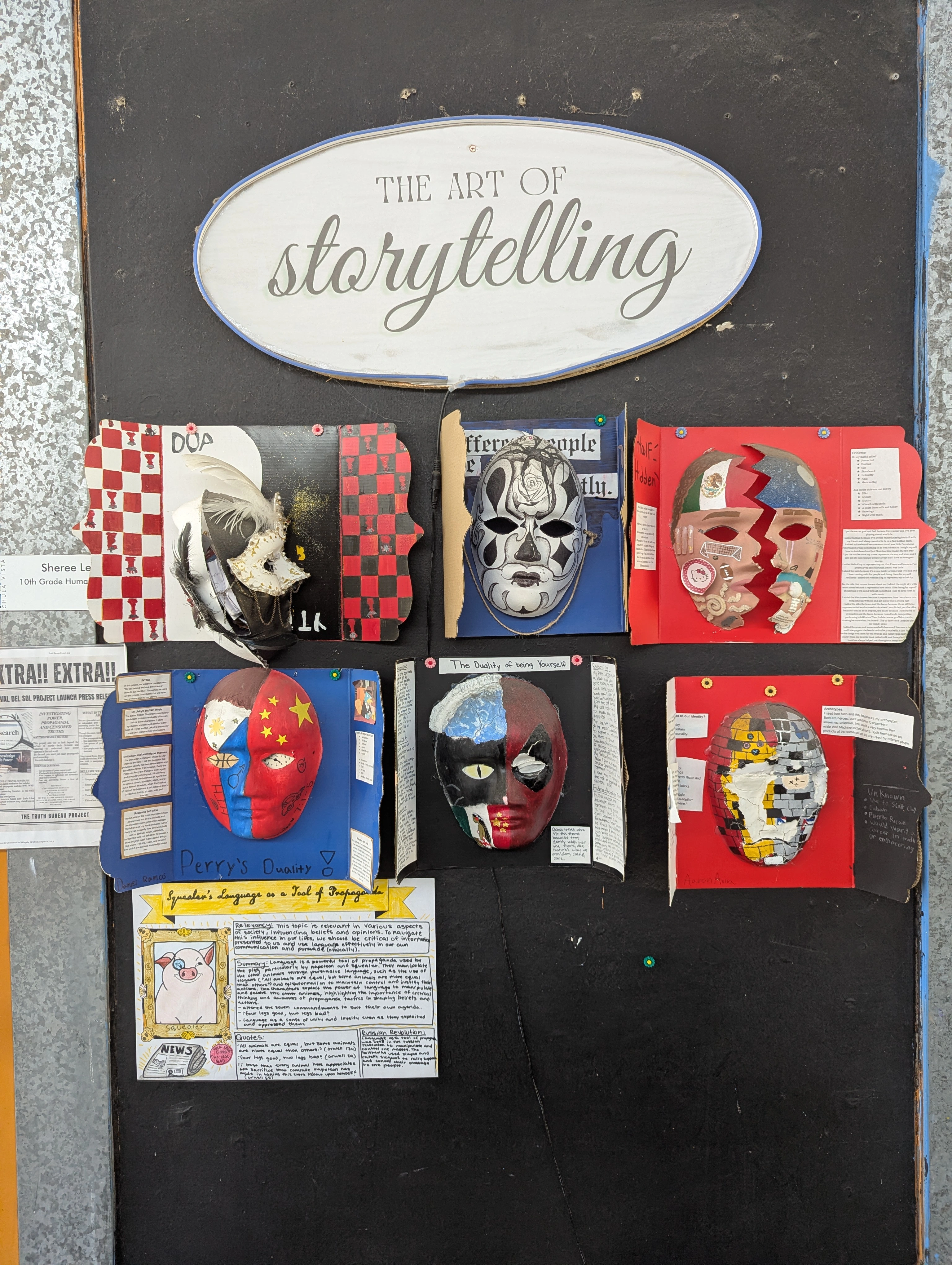
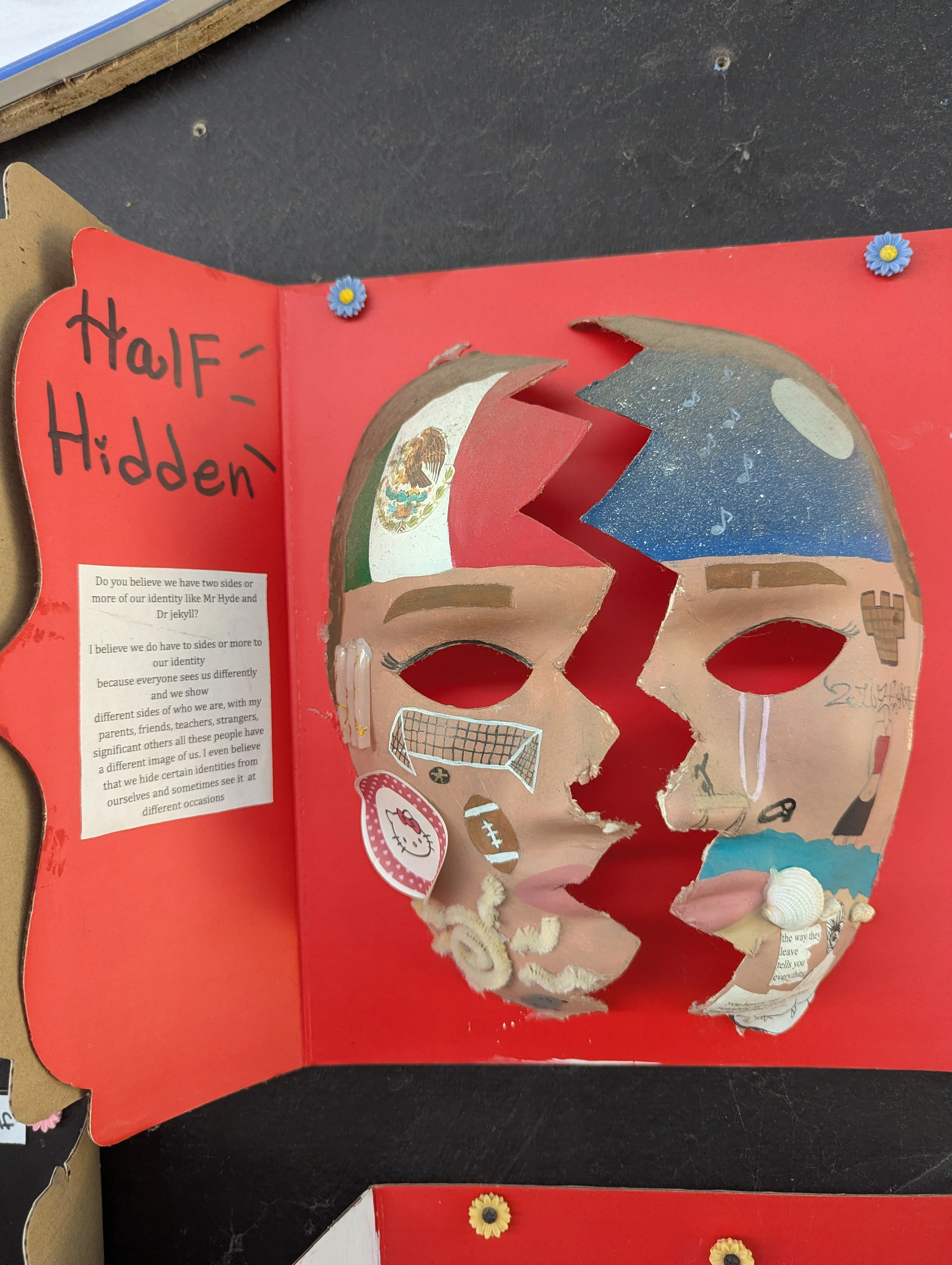
What a profound and important thing to learn about - That we can mask, that humans have personas and that we can notice, name and choose when and whether we mask. Again, those of you who know me will know I’m a huge advocate for therapy and self-work. So much so, I bought this jumper:
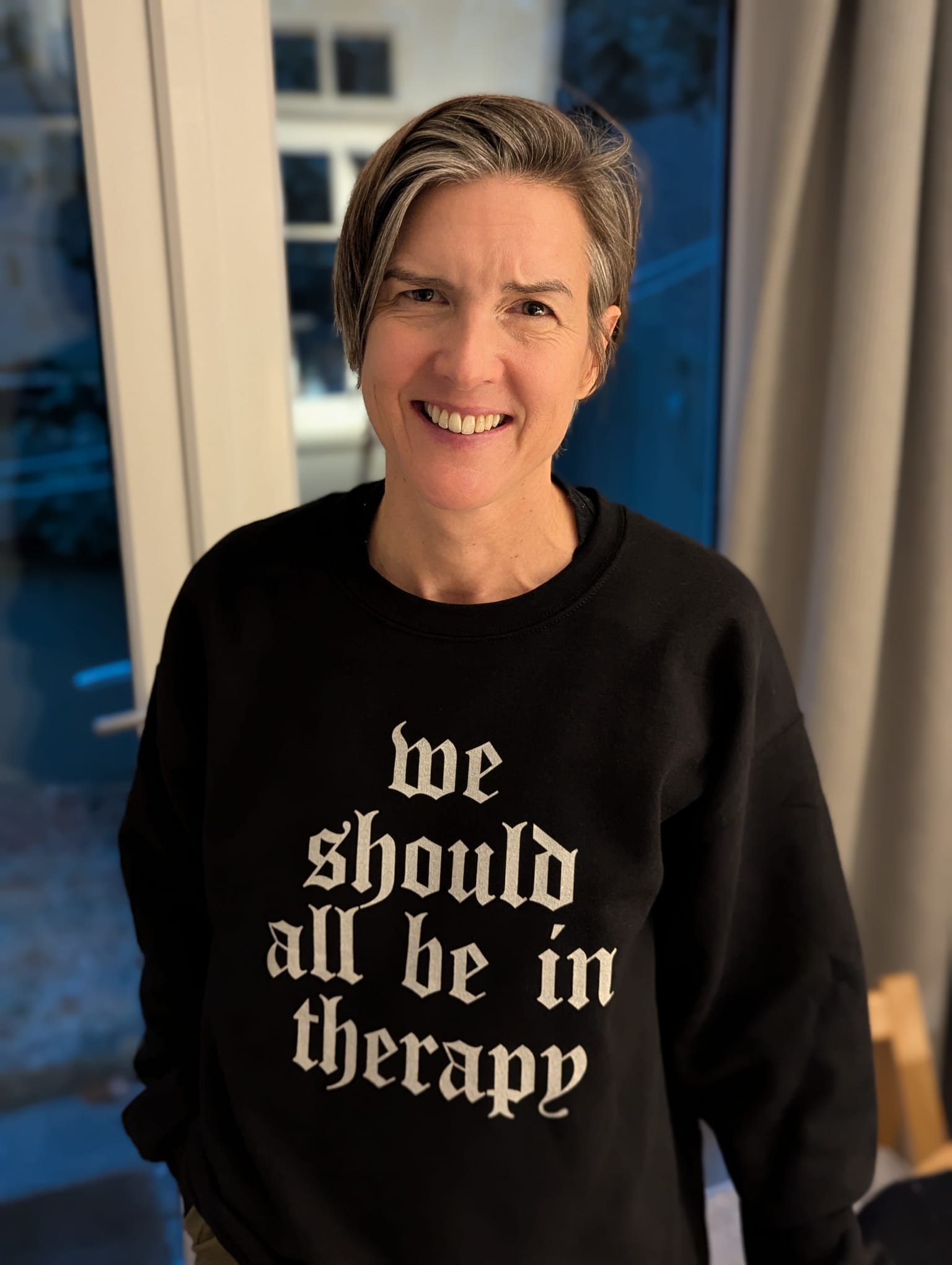
I genuinely believe that if every adult committed to going to therapy - whether a parent, educator or a CEO or president (!), the world would be in a much better place. It’s also possibly the one thing that is, in fact, in our locus of control - working on ourselves for a better world.
Anyway, back to teaching in schools, I’ve reflected many times - what would it look like if we attended to the things that caused trauma in schools before those things became embedded in our psyches and drove our behaviour? .. Before we all hit midlife and realised we needed to go to therapy (or not! Cue: repetition of inter-generational cycles). Exploring masking is a strong step towards that kind of pre-emptive thinking.
When speaking with middle school students, they spoke about how important focusing on cultural identity had been for them. This is what one of the students had to say:
“As a student with Filipino and Mexican parents, the focus on valuing and learning through and about many cultures has been very healing for me.”
Those were her words - Valuing her and other student’s cultural identity, for her, had built connecting and a sense of pride and gratitude for her heritage, which had also being healing for her. This comment was the spark for this blogpost.
Some reflections:
- Exploring the 9 human needs above, I wonder which ones you feel might have been met in some of these projects at HTH?
- In your experience in visiting and working in schools, which approaches or curricula do you feel are most healing and connecting for students?
- If we gathered data on the emotions experienced by students at HTH, what do you imagine they might be?
Example 2: Outdoor Learning Programme at A.R. MacNeill Secondary School.
As part of the NOIIE conference, international guests had the opportunity to visit schools in Vancouver. The focus was on outdoor learning and outdoor education. We saw a range of ways schools in Richmond, an urban area of Vancouver, were coming up with nifty ways to take learning outdoors. The research that backs up the benefits of learning outdoors is huge. Yet, in a busy classroom with lots to think about it can sometimes feel like a challenge to take learning outdoors. I loved the stance of Dr Megan Zeni - rather than thinking “How might we take this learning outdoors?”, we could, instead, ask ourselves,
“What about this lesson HAS to be taught inside?”
This, for sure, was the stance of educators who lead the Outdoor Learning Programme at A.R. MacNeill Secondary School. We were able to join in with a lesson preparing the students for an educational visit. The students were gaining an understanding of the values of the place they were visiting and how they might behave in relation to these values when they were there. This in itself was fascinating to me - That teachers and students would take the time to explore the value set of the company they were visiting and, as a sign of respect and exploration of their own values, consider how to show up.
Understanding yourself as a human builds self awareness and character. It was Socrates who famously said, “Know thyself” - Understanding your own values goes a long way to knowing yourself. Even better, understand how you live and breathe your values (and don’t! Often our shadows are playing out an entirely different story to the one we profess to be living - another plug for the self work - no-one wants to be a hypocrite!). Even better better, understand the values of those around you, the places you visit, how they complement yours (or not!) and learn to show compassion and respect at that interface. If showing this level of self understanding and understanding of others isn’t healing, I don’t know what is! (Side note, the first chapter of my next book focuses on understanding our values, beliefs and strengths and applying them to our roles - Step one for being a strong human and strong team member …)
Oh, and in terms of the question Megan asked above about “What about this lesson HAS to be taught outside” - the lesson above could have easily been taught in a classroom. The teachers took the students out onto the school field and they sat in a circle on tarpaulin with clipboards - grounded in the earth, breathing in fresh air whilst reflecting and learning together. This was a delight to see with 14 and 15 year olds. These students got along incredibly well, were reflective and attentive and went out of their way to include me and the other educators visiting their school.
Again, circling back to Marshal Roserberg’s human needs, which ones are being met in this example?
I want to end with this picture - It was a moment at the end of the lesson above where the teacher shared this word and explored its meaning with students.
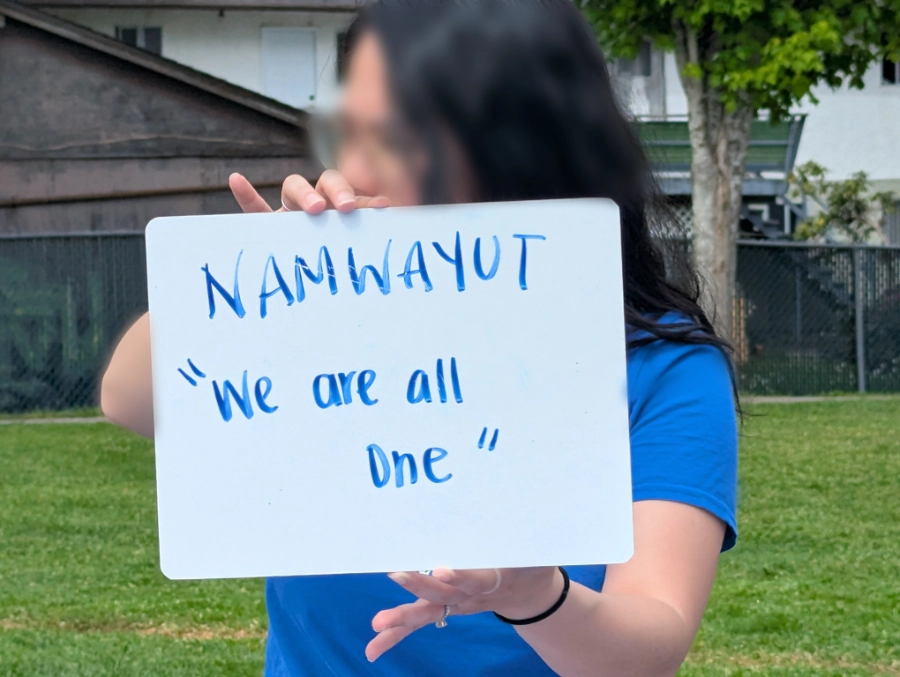
I whelled up when I reflected on this with adults after the programme - There are students in our world learning about the inter-connectedness of life and how we have a lot more in common than we don’t. More healing! And not just for the students, for me too! I wish I’d learned that in school …
So how are these examples of learning healing?
For me, the students:
- Felt more pride and connection than shame and disconnection
- Were learning outdoors, so were grounded and regulated
- Built relationships through conversation and collaboration (a top Design Principle of the LPA)
- Were engaging in meaningful, purposeful learning that had impact beyond their school walls
- Were exploring concepts most adults would feel challenged in grappling with, including identity, fragmentation through masking and in depth understanding of values.
As I mentioned, I nearly called this post "Shameless Learning." Perhaps that's what we're really talking about - schools that are intentional enough, brave enough and relational enough to replace shame with pride, disconnection with belonging and compliance with genuine purpose. We know what that looks like. The question is whether we're willing to design for it.
I love to hear your reflections in the comments below or on LinkedIn.
P.S. If you’d like more content like this to provoke your thinking and bring real-world learning to life, sign up to the Learning Pioneers mailing list here.
Author

Becky Carlzon
Becky is the co-creator and thought-leader of Learning Pioneers. She loves the magic of children's imagination and thinking and has taught in classrooms across the world from Argentina, to Thailand to the UK, where she is originally from. She has co-authored a book with Professor Guy Claxton and travels the world inquiring into the most meaningful, purposeful, joyous educational settings across the globe.
Recent Blog Posts
Can exhibition amplify Learning Power?
Discover how exhibitions can significantly boost learning power for students and professionals alike. Explore the benefits and impact.

Continue Reading...
Learning that goes beyond
Explore how Liger Leadership Academy in Cambodia uses Project-Based Learning to foster meaningful, purposeful, and joyful learning, developing ambitious students who make a difference.

Continue Reading...
What’s in your Palette of Learning?
Explore how intentional pedagogical approaches, inspired by James Nottingham and innovative educators, can create richer, more relevant learning for students. Discover practical examples and provoke your own teaching strategies.

Continue Reading...

Learning Pionners
Links Menu
Join the educational pioneering newsletter
Receive regular updates on cutting-edge pedagogy, professional development, and classroom practice.
© 2026 Learning Pioneers LTD. All rights reserved.